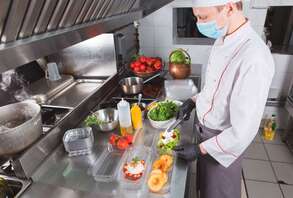
 At the height of the pandemic, it seemed like ghost kitchens might be the restaurant industry’s salvation. But once restaurant dining rooms reopened, many of the large brands developing these operations failed as consumers directed their dollars toward businesses whose locations and brands they recognized – not (as many consumers perceived) tech companies that happened to prepare food. But now the remnants of major ghost kitchen brands Nextbite and Kitchen United are being repackaged into something new that may help revive and repurpose ghost kitchens. Fast Company reports that Sam Nazarian, founder and CEO of the hospitality brand SBE, who recently acquired the above ghost kitchen brands, is reassembling them in ways that lean on the individual brands of the restaurants they include and the chefs and other personalities behind them. Further, this reinvention of ghost kitchens is embracing the physical spaces – including grocery stores, food halls and hotels – that consumers trust when they make decisions about the food they eat. Nazarian is then weaving in the strong digital ordering and distribution channels that made ghost kitchens seem so promising in their original incarnation. While it’s early to say if this updated approach to ghost kitchens will pay off, it may set the tone for how restaurants might be able to use them to tap into new income streams going forward – capitalizing on efficiency and scalability but retaining more of the qualities that have always made restaurants desirable to consumers.
 It wasn’t so long ago that ghost kitchens felt like a must-have tool in a restaurant operator’s portfolio, offering flexibility with menu offerings, greater control over overhead costs, and simply a means of getting restaurant-quality food to consumers during the early months of the Covid-19 pandemic. Now, as people look to restaurants as gathering places and lean on grocery stores for more of their at-home dining needs amid high inflation, many ghost kitchens are facing headwinds. While some ghost kitchen brands are growing, particularly when they have backing from large restaurant conglomerates, there have been more closures of virtual brands in recent months – even for well-established restaurants including Chili’s and Wendy’s. Industry analysts say that consumer concerns about quality control and uneven familiarity with tech-driven and restaurant-driven ghost kitchen brands could be part of it. As a result, expect to see new hybrid ghost kitchen models emerge that may lack dining rooms but do have physical locations, staff and even event space that guests can visit to better connect with the brand. It’s another lesson for restaurant operators in how times and consumer habits can shift so quickly, calling for rapid adaptations. Having the tools, systems and menu flexibility that allow you to be nimble may be the best investment. It’s important to be able to scale different parts of your business up or down based on the insights you’re gaining from your data – and retain the power of your brand in the process.
 Restaurant operators have had to embrace doing more with less – but that doesn’t just have to be about providing a smaller menu with a smaller staff and making it all work. Hybrid ghost kitchens have been on the rise in recent months – and they have the potential to help restaurants use their equipment, staff and ingredients to reach a wider audience. While ghost kitchens, or dark kitchens, were initially known for keeping their operations behind the scenes, these up-and-coming hybrid models are more transparent. They might openly operate a side brand out of the same kitchen that services the restaurant or collaborate with complementary restaurant brands to benefit from economies of scale. We’re at a point where consumers simply value good food – whether it comes from a restaurant kitchen, home kitchen or the kitchen of a collection of multiple brands. This year, how can you tap into your tech to ensure you’re making the most of the resources you have available?
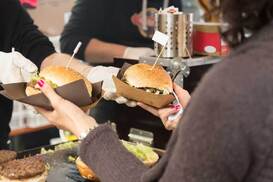 For restaurants, the past couple of years have been a study in becoming more flexible: learning how to scale up in certain areas, scale down in others, adopt new streams of business and change service models based on the evolving lives and habits of guests. While pandemic challenges are waning, economic challenges remain: According to recent data from the National Restaurant Association, 85 percent of operators say their restaurant is less profitable now than it was in 2019. While the specific challenges facing the industry are changing, the need for flexibility is not. Restaurant brands that gave up their dining rooms a year ago in an effort to accommodate more efficient delivery may now find themselves being passed over as consumers seek out restaurants for special dine-in experiences. Dissecting your brand may help you get to the root of what your restaurant needs to offer to more easily navigate uncertain times. What qualities are at the heart of your brand? Sustainability? Comfort? Fresh, in-season ingredients? Consider how you can best serve your guests using a range of approaches and vehicles. From your website, to your dining room, to food trucks, to partnerships with convenience stores, delivery companies, e-commerce companies or other industry segments, how can you offer the experience of your food in ways that allow you to reach guests efficiently and flexibly – and regardless of the current economic obstacles that may stand in your way?
 While ghost kitchens took off during the pandemic when dining rooms were closed, their popularity began to cool over the summer as more consumers either returned to restaurant dining rooms or reigned in their spending on delivered meals. As a result, while ghost kitchens continue to grow, they are growing at a slower rate than they were. Mott Smith, cofounder and CEO of Amped Kitchens, recently said he is fielding more calls from real estate brokers looking to sell poorly located ghost kitchens – particularly those that aren’t able to adapt to multiple sales channels. (Ghost kitchens that operate as food halls with delivery functionality have been more successful in capturing traffic.) How times have changed once again – and have again demonstrated how important it is to build flexibility into your business model. In the meantime, what will become of the ghost kitchen facilities that have accumulated in less-appealing locations? Restaurants looking to test new concepts or launch additional franchises may be able to find reasonable deals, including hourly and daily lease terms, on shared commercial kitchen space. The benefits of these spaces remain: Newer franchises can benefit from the skills and expertise of more seasoned franchises operating out of the kitchen, all while avoiding the costs and responsibility of real estate when trying to launch a new concept. While ghost kitchens themselves are evolving, they may still be able to help traditional restaurant concepts evolve.
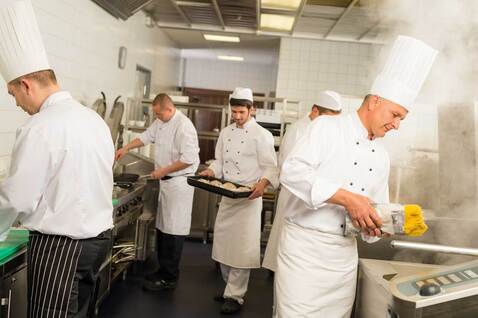 As restaurant operators have tried to accommodate off-premise guests in recent years, the ghost kitchen quickly emerged as an appealing solution – giving operators a low-overhead option for starting a new foodservice concept or keeping an existing one humming while dining rooms were closed. But growing pains have begun to emerge for the industry. A recent Restaurant Business report indicated that operators were struggling with the high cost of delivery from their ghost kitchens, as well as attracting and paying staff and marketing locations that were designed to be invisible to the public. But since ghost kitchens were initially promoted as operator-friendly entry points into the industry, some say their difficulties may be more rooted in the experience of the operators themselves. John Meyer, CEO of Ghost Financial, which provides loans, insurance, payroll and other financial products to ghost kitchen operators, told Restaurant Dive that ghost kitchens have been attracting operators who lack industry-specific skills in digital advertising, targeted advertising and integration with delivery apps. But as we have learned from the pandemic, every challenge creates an opportunity: To help ghost kitchen operators get up to speed, Meyer developed GhostU, an online educational program designed to help restaurateurs build, scale and run a profitable ghost kitchen. Restaurant Dive reports that the program provides a minimum of 12 videos, along with step-by-step worksheets and three months of access to Ghost Financial’s Ghost Kitchen Community, where ghost kitchen owners can share their experiences and access interactive workshops and Q&A sessions.
 At the time of this writing, remaining hopes for the replenishment of the Restaurant Revitalization Fund (RRF) were dashed when the $48 billion bill to provide relief to small businesses hit by COVID restrictions could not get sufficient votes to overcome a filibuster. Last year, the fund had helped restaurants struggling with the strains of the pandemic to pay employees and cover debts. However, of the more than 278,000 restaurants that applied for funds, only 101,000 restaurant applicants received grants before the Small Business Administration had exhausted its funds. For the remaining restaurants, the replenishment of the fund was especially critical. According to the National Restaurant Association, 62 percent of operators who didn’t receive funding have racked up additional debts and 57 percent have fallen behind on expenses. The Independent Restaurant Council estimates that more than half of the 177,300 independent restaurants awaiting RRF grants could close without additional aid. So if relief isn’t coming in the form of grants, where can operators find it? Start with your relationships. Find other operators in your situation and discuss how you might help each other through this rough patch by pooling staff or supplies, sharing expertise or even partnering in a different venture like a virtual kitchen. Lean on your strong relationships with landlords and suppliers and look for any leeway they might give you on existing contracts. Finally, talk to your guests. They don’t want to see a favorite community business go away, so this is a prime time for them to demonstrate their loyalty. They might be able to help you brainstorm ideas to generate much-needed income and community support in the near term.
 The market for virtual kitchens is forecast to reach nearly $14 billion, expanding at a compound annual growth rate of 12.5 percent, according to new research from Market Research Future. Virtual kitchens represent adventurous new territory for the restaurant business, replete with both opportunities and risks. On the opportunities end, virtual brands could potentially give a great boost to restaurant businesses that lack a strong online presence. As this recent report from Eater describes, Kellogg’s, a 24-hour diner that has been operating in Williamsburg, Brooklyn, for decades, recently partnered with Profit Cookers, a company that creates and licenses brands to restaurants. Kellogg’s runs 18 of Profit Cookers’ virtual brands out of its diner. In practice, a consumer looking for an egg and cheese bagel online will see the option pop up from one of those 18 brands – all of which have a generic sound to them, almost like they were designed to maximize search engine optimization. The virtual brands tap into the expansive menu offered by the diner, while the diner benefits from the virtual brands’ expanded hours and delivery radiuses. The owner of the diner says the partnership has brought in $40,000 in additional sales. Of course, this new era in off-premise dining has plenty of risks and unknowns to work out as well. Restaurants that farm out their food under a range of brands are expanding their reach but also diluting the brand experience. It’s difficult for the consumer to know where their food is coming from – and unclear who is responsible in the event of a food safety or quality problem.
 Ghost kitchens, a $43.1 billion industry in 2019, are expected to become a $71.4 billion industry by 2027, according to Hospitality Technology. But as major restaurant brands expand into virtual restaurants in some form, the industry could become quite competitive. The international food and restaurant consultancy Baum & Whiteman anticipates a forthcoming point of oversaturation akin to the dot-com boom of the 90s -- and a rush of mergers and consolidations in the next two years as a result. Having access to capital and other financial resources right now could be critical for these operations to build and maintain a presence. But as these nascent operations develop and look for capital to expand, they’re often seeking help from financial institutions that may not have been exposed to these businesses enough to effectively underwrite them. As a result, new sources and methods of financing are popping up, which may be welcome and necessary for ghost kitchens looking to navigate the challenges of the current economy. One such company is Ghost Financial, which according to Tech Crunch offers a cash-back credit card to be used for food and beverage inventory purchases, and also uses “data and technology to underwrite restaurant expansion loans and credit limits for the card.” Next, the company plans to focus on offering restaurant insurance and developing an optimized payroll system.
 Ghost kitchens: Do the numbers work for you? Ghost kitchens are continuing their climb: By 2030, they are predicted to hold a 50 percent share of the drive-thru and takeaway foodservice markets, respectively, according to Statista. As restaurant operators think about the best ways to serve existing customers and tap into new markets, ghost kitchens could be an important part of a business strategy. Perhaps you had to close a brick-and-mortar location before or during the pandemic – or you want to enter a new market that sounds like a good match for your brand. You could open a small brick-and-mortar location in a high-traffic area to collect information. But you may be able to gain the same – or better – insights with a ghost kitchen operating with a much smaller real estate footprint in a less-expensive area. Ghost kitchens’ ability to help brands test market viability in a low-risk way is exactly why brands like Famous Dave’s consider them to be important to their business model. As Al Hank, COO of Famous Dave’s parent company BBQ Holdings Inc., said in an interview with 1851 Franchise: “That is typically a multi-million-dollar test, and you never know what the outcome is going to be, but ghost kitchens allow you to do it in a much more cost-effective manner.” So exactly how cost-effective might a ghost kitchen be for you? Dan Fleischmann of the restaurant equity investor Kitchen Fund developed a ghost kitchen calculator, available at Restaurant Dive, to help concepts get an initial sense of whether a ghost-kitchen concept might make financial sense. You plug in some key data about the business, cost structure and volume assumptions, then the calculator projects the resulting profit or loss, as well as the return on invested capital.
|
Subscribe to our newsletter
Archives
April 2024
Categories
All
|
 RSS Feed