 Staffing is a perennial challenge in the foodservice industry. So could that be a sign that it needs an overhaul? The National Restaurant Association is studying potential solutions – and increasing numbers of gig workers may be among them in the years ahead. About one-quarter of the restaurant operators surveyed in the association’s recently released State of the Restaurant Industry 2024 report said they would consider using gig workers to supplement staff. It may not be a huge leap, considering many foodservice staff work part time and turnover is frequent enough that many restaurant workers are newcomers. However, the similarity has raised concerns in certain jurisdictions due to potential conflicts around third-party contractors classifying their gig workers as “independent contractors” and excluding them from the benefits and stability of full-time employment, according to a Restaurant Dive report. Are gig workers currently part of your staffing strategy – or could they be in the future, particularly around busy periods when you anticipate needing additional support? How could your tech stack support this change? If your suppliers are also hiring more gig workers, how are they ensuring consistency and safety in their products? How might your approach to training – as well as your approach to hiring management roles—need to change if you had more gig workers stepping in to fill gaps on your staffing schedule?
 Set holiday expectations
High inflation and a shortage of staff could mean the holiday season will be looking a little different this year at many restaurants around the country. According to research from Alignable, 48 percent of operators aren’t hiring seasonal or permanent employees, and another 8 percent are laying off employees because revenues no longer support additional hires. At the same time, consumers have been steering their purchases toward more experiential things – to include travel and restaurant meals, as Mastercard CEO Michael Miebach shared on a quarterly earnings call in late October. When consumers spend right now, they’re looking for something special – and that sentiment only ramps up around the holidays – but that can be difficult for restaurants to offer consistently with a skeleton crew. To avoid creating a recipe for guest disappointment and staff burnout, now is a good time to steer your holiday guests toward the experiences that you’re best able to manage with a smaller team than normal. That could mean focusing on promoting holiday meal bundles to be eaten at home, closing your dining room to accommodate more special events where you can more easily plan ahead with staff and supplies, and promoting gift cards for VIP experiences you’re offering in the slower winter months. If you’re operating as usual, just make sure you’re serving a menu that’s as easy and fast as possible to execute with a limited crew.  The National Restaurant Association has said that employee turnover in the restaurant industry is nearly 75 percent, compared to about 49 percent for the total private sector. So as painful as the Great Resignation has been for the US economy overall, restaurant operators have felt it especially severely. Restaurant companies that are succeeding at recruitment and retention right now are taking steps to be as proactive as possible at bringing in potential staff and then giving them the career options and stability they need to stay. In a recent webinar, “The Future of Food: The Role of Technology in Restaurant Recruitment and Retention," presented by SmartBrief, Jamie Starner of Bartaco mentioned that every one of their applicants is likely applying for seven other jobs at the same time, so it’s critical to make it easy for people to apply for open positions and then respond to their inquiry promptly. To make that happen, the company uses QR codes to connect people to their open positions, sends applicants a text in response, and uses the Calendly app to encourage applicants to schedule their interview on the spot. Keeping staff happy, according to the restaurant leaders on the webinar, has been about showing them potential career paths at the company, polling them regularly to better understand what they need, and offering the stability and flexibility that comes with offering a salary and other benefits. Instead of accepting tips, some incentivize good service through bonuses provided in exchange for high online reviews each month. For Kelly Phillips of Destination Unknown Restaurants, being able to provide a salary and a career path more akin to what someone might find in other parts of the private sector has been about operating as leanly as possible – using handheld POS devices has helped the company slim down the number of staff needed, for example, so the company has the resources to take good care of the ones on hand. As a result, she says, she doesn’t often have server openings, doesn’t have the ongoing expense of recruitment, and some former servers have stayed to become partners in the company.
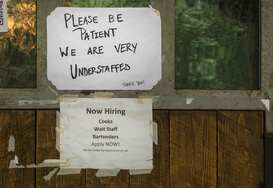 While the leisure and hospitality sector added 67,000 jobs in the latest report from the Labor Department, indicating the ongoing rebound of the sector, the demand for restaurant food is continuing to stretch labor. In other words, it’s more important than ever for the people restaurants do successfully hire to stick around. Have you adapted your recruitment and retainment approaches to fit the current candidate’s market? Focus on finding the right fit from the start. In a recent report from QSR Magazine, the head of client success at Harver, a recruitment partner for McDonald’s and Chili’s, shared that it helps to identify the key skills you need from a person by giving them situational judgment tests. These include a series of scenarios that relate to the role and ask a candidate how they would respond. Much like considering the experience of a guest, streamline the application process and remove obstacles that could get in the way of their understanding the role accurately. Be crystal clear about the requirements of a job by avoiding jargon and providing examples of the kinds of situations a team member is likely to have to manage on the job. Think about your business as a launching pad for hires – what opportunities do you offer to help people develop new skills that help them progress in your business or can transfer to other industries? Where are there opportunities for you to offer flexibility? Finally, while your perks and benefits may get a person in the door, they won’t earn their loyalty if there isn’t a strong workplace culture in place. Focus on building and sustaining a close, supportive team.
 Just when Covid-19 was becoming more manageable for restaurants, the war in Ukraine is intensifying inflationary pressures on everything from wages to food supplies to equipment. No doubt, these are trying times for operators – and economists expect them to continue into next year. But these times can also provide opportunities to fix operational processes that have long needed attention and can no longer be ignored. As Keith Anderkin, chief supply chain officer for the fast-casual chicken chain Zaxby’s, recently said in a podcast for Restaurant Business, “never waste a good crisis.” Imagine how your business will be in a position to thrive in better times if you can get a handle on any weak points now. So what might you do to ensure you’re operating as efficiently as you can? Fine-tune your communication with your marketing team so you’re able to adjust your calendar of promotions in sync with your changing supply. That may mean focusing more on core menu items that are easier to source, then weaving in limited-time offers as needed to ease the pressure when supplies become scarce. Or it could mean strengthening your pipeline of menu items in development so you have a deeper bench to lean on when a key player isn’t available. You might assess your current and future equipment needs and find out where a substitute piece of equipment may be acceptable – and get a jump on ordering something that is critical but comes with a long waiting period. It may mean taking a closer look at your labor and identifying how to ensure you’re using it wisely in both front-of-house and back-of-house tasks. It’s rare to be operating at a time when so many challenges are colliding. Making sure you’re in close connection with all areas of your operation can help you understand any areas where you might find some relief.
 At this time last year, it would have been unthinkable: During the first three quarters of 2021, sales for DoorDash and Uber Eats have plateaued, after a steady rise in 2000. To be sure, off-premise solutions are still needed and not going anywhere – particularly after the lockdowns made restaurant takeout and delivery the only means of getting restaurant food. But even as consumers have been enjoying a gradual return to in-restaurant dining this year, the stagnation in sales for third-party delivery providers does demonstrate the need for restaurant operators to be nimble in response to fluctuating demand from different sources. When you are faced with changing conditions – be it the weather, supply hiccups, foot traffic outside your storefront or something else – how quickly can you adapt? Lean on forecasting tools and information on historic sales to schedule staff and predict traffic, along with a Kitchen Display System that can help you streamline and prioritize orders from different streams. On the lower-tech side, consider approaches including cross-training staff in a range of tasks and using more speed-scratch ingredients in the kitchen in order to free up staff to take on different tasks as demand requires.
 Even in the best of times, restaurant margins are thin. Challenges related to the pandemic, labor, food prices and the supply chain only place additional strain on them. But the good news is that there are a number of steps operators can take to cut costs without taking anything away from the guest experience. First, ease supply chain-strains by ensuring your inventory goes as far as possible. Encourage precise ingredient measurement across your menu – Modern Restaurant Management advises operators to measure ingredients in grams vs. ounces for a more precise result. Take stock of your energy use and find ways to use it more efficiently – by turning equipment on only at the time it is needed, using energy-efficient lighting, and adopting technology to monitor your appliances so you can be alerted and act quickly if something isn’t working as it should. Be just as mindful of food waste. To avoid having usable food scraps tossed out, Restaurantowner.com suggests eliminating trash cans in the kitchen and giving each kitchen employee a clear box with their name on it where they can place food scraps so managers can minimize food waste being generated from the kitchen. Where possible, consolidate purchases with a single supplier to gain leverage in purchasing agreements. Finally, make the most of the staff you have by scheduling people in accordance with your anticipated sales and traffic each week – your schedule should not be on autopilot
 The restaurant industry is still trying to climb its way back to pre-pandemic employment levels. According to research from the National Restaurant Association, the industry is still about one million jobs shy of the 12.3 million jobs it offered before Covid-19 hit. Throughout the pandemic, many news stories have said the high rate of restaurant employee turnover was due to staffers’ unemployment benefits surpassing their restaurant earnings. But according to a recent report from Restaurant Dive, the reality is more complicated than that, and a combination of factors are responsible for escalating employee turnover: Among them are a shift of workers into other professions, a shortage of people with cooking skills and increasing reports of abuse on the job. But there are steps restaurant operators can take to help mitigate some of those problems at their own businesses. Restaurant Dive suggests adopting tech tools like on-demand pay apps, which tend to offer more flexibility on pay schedules. Further, it advises operators to be clear in job postings about wages, schedules, benefits, room for advancement, and incentives such as employee referral bonuses. Overall, put yourself in the shoes of a potential employee, who wants to work in a safe environment, understand their responsibilities on the job, be paid on time for shifts completed, and be granted some flexibility if and when their personal lives require it.
 Consumers are expecting things to be a bit different as a result of the pandemic – and at a time when supplies continue to be short, labor is difficult to find and customer traffic is unreliable, restaurants can use this expectation to their advantage. Many restaurants already are: Take Michelin-rated Eleven Madison Park, which announced it would be reopening as an entirely plant-based restaurant after its closure during the pandemic. As you have managed your restaurant throughout the course of the pandemic, have you come to conclusions about major aspects of your business that need to change in order to preserve the longevity of your restaurant? Would you be better able to stabilize your menu by making it entirely plant-based? Have you always relied on a dine-in customer base but believe this can no longer be your main source (or even a small source) of sales? Do you think you should serve a different demographic of customers than you did before? Are you too reliant on labor shifts – and burdened by the need to provide higher wages and benefits? Now is a good time for reinvention. Identify your primary pain points when it comes to your supplies, staffing, marketing and day-to-day operations management. By changing things that may have needed changing for a long time, you can give yourself a new story to tell customers, refresh your brand and generate renewed interest in it as we emerge from the pandemic.
 The pandemic has been a time of reckoning for restaurant employees – and, since labor is scarce, also a time of empowerment. Bit by bit across the country, more restaurant workers are taking steps to unionize, whether in an effort to improve the current working environment at their restaurant or to normalize and spread the employee-friendly culture they already experience at their restaurant. It’s a trend that industry analysts expect to continue. In the U.S., just 1.2 percent of the estimated 11.9 million people working in restaurants and foodservice belongs to a union, according to the U.S. Bureau of Labor Statistics. That makes the industry one of the least unionized of any employment sector, despite its reputation – fairly or unfairly – for instability, low benefits and pay, and abuse from managers and guests. Many new efforts at unionization, such as those at Pavement Cooffeehouse in Boston, have been employee-led. In other cases, restaurant operators are going so far as to encourage the unionization of their business at the outset. In Rochester, N.Y., Meghesh Pansari, the owner of the Indian restaurant Nani’s Kitchen, encouraged his employees’ decision to unionize – perhaps because his restaurant already has an employee-friendly culture that he would like to serve as a model for other operators. Workers there share tips, make $15 an hour, get a week of paid sick leave annually, and the company covers half of the monthly payment for the health care package it offers full-time workers through the Healthy New York EPO plan, according to the Rochester City Newspaper. One shift leader said, “We had to unionize at Nani’s because we already had very good conditions, and we think that it’s important to kind of try to start pushing this and encouraging other restaurants to unionize.”
|
Subscribe to our newsletter

Archives
April 2024
Categories
All
|
 RSS Feed