 Despite all that has been done to simplify restaurant menus in the past few years, it appears there may be room to go further. Restaurant Business says that according to a newly published survey of 1000 consumers by U.S. Foods, the average restaurant guest spends nine minutes perusing the menu before ordering — and for the vast majority of guests, that is on top of the time they spend skimming the menu before arriving at the restaurant. Further, even though 82 percent of guests said they prioritize convenience when they choose where to eat, the average guest spends 23 minutes contemplating what to eat — not the most convenient way for guests to access restaurant food (or the most efficient way for restaurants to turn tables, either). So where is there room for change? Most consumers surveyed said they dislike QR codes and even more said that physical menus should be available at restaurants, so it sounds like the physical menus themselves still need greater simplification and clarity. The survey found that more than half of consumers said they still felt they had too many options to consider on restaurant menus, while 79 percent said they struggle to decide what to order. They key elements that consumers said they preferred on menus included clear descriptions that listed all ingredients, images of menu items, and prices, so you might consider these factors as a guide. In your on-site interactions with guests and in guest reviews, do you detect signs that your menu needs further simplification? Are guests confused by the variety of options, looking for ways to modify existing menu items, or struggling to find items in their price range? As you optimize your menu in the coming months, there may be opportunities to refine your options and make the process of ordering from you faster and more convenient.
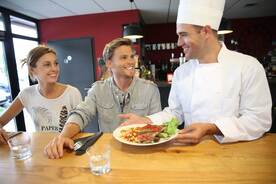 Experiential. High-value. Exclusive. These words come up repeatedly when consumers are surveyed about what they enjoy about restaurant dining nowadays – and what makes them crave a return visit. In the recently published LDEI Trends Report 2023, one theme that emerged was how bringing chefs front and center – in more ways than before – can help restaurants succeed in accommodating those consumer preferences. The visibility of your chef can send a message about everything from your restaurant’s values to the quality of the experience you offer. Because consumers are increasingly savvy about ingredients, food sourcing and how various foods affect their personal health, chefs can add interest and education to a menu offering by finding ways to share the story of sourcing a special, high-quality ingredient and how it makes a significant difference in a dish. They can also make on-trend meal preparation methods more accessible – like by showcasing how to bring vegetables to the center of the plate in appealing ways, for example. Seeing chefs cook – in a pop-up setting, table-side, at a chef’s station in your restaurant, or even in a food truck – can lend some spontaneity to a meal and make it feel like an exclusive experience – something worth more than the price of the food itself. Regardless of your restaurant category, you can benefit from making your chefs a highly visible part of the experience you offer. Are there opportunities you haven’t tested yet?
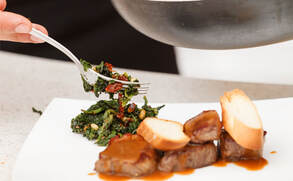 Like never before, restaurants are gaining new tools to collect guest data and mine it for increasingly precise insights. This information is feeding limited-time offer ideas and menu development, as well as expanding operators’ capabilities in terms of the targeted communications they can send to subsets of guests. It’s also shifting the competitive landscape for restaurants as businesses adopt restaurant technology in varying degrees. Sweetgreen’s CEO, for example, recently announced that the salad brand would like to do for the menu what Spotify did for the playlist – in other words, identify exactly what ingredient and nutrient combinations people want and need to eat, then executing that to a specific degree. Expedite reports that Sweetgreen’s robotic technology, currently in use in two of the brand’s 225 locations, can dispense all of the restaurant’s 55 ingredients with the exception of avocado and salmon, which require human intervention. So far, the technology is proving to lift check totals and margins (it can measure ingredients down to the gram, eliminating waste). The planned expansion of this offering sets the stage for guests to not necessarily order off the menu, but to get customized recommendations based on the information they are willing to share about themselves. To be sure, most restaurants won’t be investing in the kind of robotic technology that is in place at Sweetgreen. But the changes at Sweetgreen – and similar changes at other brands – are apt to incrementally move the needle when it comes to consumer expectations. What mechanisms can you put into place that will allow you to address a range of dietary needs and preferences?
 Over the years, how much happy hour business (or other after-work business) has your restaurant generated? If this part of the day once provided a steady stream of traffic for you on several evenings a week, chances are times have changed -- due to factors such as the increase in hybrid work schedules post-pandemic, people’s desire to keep their professional and personal lives separate, and a decline in alcohol consumption. Research from Fox Business found that happy hour traffic has dropped by 49 percent in recent years. If this has impacted your business in any way, it could be a good time to gather your team and identify some new potential business streams – or simply shift your approach to the after-work crowd by offering some different options. While people may not be looking to stop in for appetizers after work, maybe they’d go for a pre-workout smoothie, meal kit or easy weeknight takeout. Maybe you can approach the offices that once gave you more after-work business and make them aware that you can cater their in-house lunches and meetings so they can make their employees’ less-frequent in-person connections feel more worthwhile. Or perhaps, now that the warm weather is coming, you can come up with a limited-time offer that will draw people to your outdoor dining area. Your data provides clues as to what your guests crave and when. What adjustments can you make that will help your business be as nimble as possible in the face of shifting traffic patterns?
 Over the past few years, restaurant operators have had to deal with multiple constraints – smaller, more streamlined menus, a shrinking supply of ingredients, and labor challenges that have made it difficult to innovate. But according to Technomic’s recently released State of the Menu 2024 report, which is based on input from the top 500 chain restaurants, limited-time offerings are helping to address a number of these issues – and are a growing area of focus in restaurants for that reason. Technomic’s research found that from 2020 to 2023, LTOs increased by 52.7 percent. These short-lived offers can give restaurants freedom to innovate, so brands can retain their streamlined core menus but pour some creativity into a special. They give restaurants a chance to offer premium ingredients or special presentations that can motivate guests to visit and help restaurants boost the value of the experience they provide. To be sure, LTOs require planning and resources to be successful, though work-arounds are emerging in that area. (Premier, for one, recently launched a Menu Innovations Program for its members that includes a prepackaged LTO concept each quarter. It includes everything an operator needs to prepare an LTO for launch, from recipes to marketing materials.) Is there room for your restaurant to use more LTOs to drive innovation in the kitchen – as well as improve guest engagement?
 Restaurant prices have undergone a reality check in recent months and years. If, like the vast majority of operators, you have had to hike menu prices to keep pace with such stresses as inflation and rising staff compensation, your guests may scrutinize their spending a bit more – perhaps cutting back on visits or ordering less when they do. Or, they may visit you on occasions when they are apt to eat a bit less – like for an after-work snack and beverage with a friend or a pre-workout boost. But you can take some steps to manage the perception that you’re stretching guests’ budgets and also drive off-peak traffic by making your between-meal dining occasions feel more special. For example, you can double down on your value options – guests are still apt to respond to offers of combo meals, meal bundles and other items that make them feel like they are getting more for their dollar. Pour some creativity into your between-meal periods by offering some eye-catching hot and cold beverages that guests can customize with their own additions. It’s also important to get personal: New research from TouchBistro found that 64 percent of restaurant operators are sending personalized offers to guests, up from 55 percent last year. So even if you’re already sending personalized offers to your best guests, your offer may be one of several vying for their attention. Drill down on your guests’ habits and lifestyles to ensure you’re offering food and drink options they will want to make part of their day.
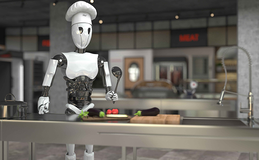 Much as we hear about the rise of robotic workers in restaurant kitchens, far more operators are looking to tech to augment, rather than replace, human staff. That’s according to the National Restaurant Association’s State of the Restaurant Industry report 2024, which found that while 47 percent of operators believe automation will become more common this year, 69 percent believe that tech will be more commonly used to support existing workers rather than replace them. One area where restaurants can focus such efforts is on their most manual, physically arduous tasks. A recent Restaurant Business report quotes ZipRecruiter research that found that workers had “real aversions to jobs that involved real physical labor.” Starbucks is one brand that has responded to this: Their cold drink orders, which comprise 75 percent of their sales, require a steady stream of ice that baristas once had to lug inside by heavy bucketfuls throughout the day. But new back-of-house technology has enabled the business to send ice into the kitchen via a pipeline, thereby eliminating that heavy lifting. To be sure, such changes require investment, but they can also save money on the back end by decreasing turnover. In your operation, are there tasks that get passed from one worker to another – or are frequently skipped because they require too much physical labor? These may be key areas to implement tech-driven supports that make work easier for staff.
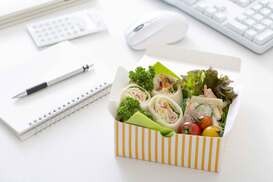 If you had to choose one big growth opportunity this year, what would it be? For a rising number of U.S. restaurants, it’s catering. Expert Market Research anticipates 6.2 percent annual growth throughout most of the next decade for businesses that offer this service. A recent Restaurant Dive report says consumers’ return to the office is driving much of the demand, though private events are also fueling it. Catering is also looking different than it did before the pandemic. There is a greater range of restaurants getting involved – from small independents to large national brands – as well as an increase in offerings like boxed lunches and individual options across the channel. Appealingly for restaurants, the average spending per person on catered occasions is skewing higher these days, despite the increase in hybrid work environments resulting in a smaller critical mass of people in offices each day. At a time when company bosses are looking for ways to increase the appeal of coming to the office and want to encourage connections among employees who may be spending less time together, food from a favorite restaurant can be a useful tool. If you plan to increase your focus on catering this year, how might your menu accommodate consumers’ tastes for customization and choice? Does every menu item you offer travel well and also help you maximize profit per head? When you send your food out the door, how well does your branding and packaging represent your business and its values? From a distance, are there opportunities for you to build engagement and loyalty among the people who are enjoying your food as a group? What incentives and promotions might help your business stay in regular rotation with these groups?
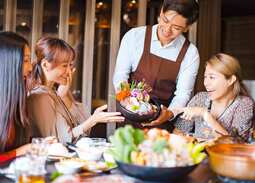 It’s a theme that has persisted since the pandemic: Consumers simply want more from restaurants than quality food and drink these days. As factors such as food inflation, threats of recession, and the slimming down of menus and staff rosters have made ordering restaurant food a harder sell for consumers, more operators have turned up their experience factor to help attract traffic. The result is a restaurant that feels like it’s as much about the atmosphere and excitement of the experience as about the food on the menu. As a recent Forbes report details, experiential dining can involve such elements as immersive themes, interactive elements, storytelling or entertainment. This can be achieved by changing up guest expectations through rotating pop-up concepts, themed dining events, or collaborations with guest chefs or complementary businesses, for example. Similarly, US Foods reports that more restaurants are boosting their experiential vibe with entertaining tableside prep, such as fancy knifework displays and avant-garde, Instagram-worthy cocktails. These approaches also provide natural opportunities for businesses to promote their offerings on social media, entice guests who are active on social platforms to share content from their visit, and forge partnerships with online influencers who can further spread the word. Even if you’re not looking to put on a show for guests, think of experiential dining as simply a means of keeping things interesting for guests. This can be a natural outgrowth of the way you have had to make regular changes on your menu due to supply chain snags or the changing of the seasons. Consider rotating in more limited-time offerings or specials, or featuring a reinvented menu of drinks, appetizers or entrées each season to keep the experience new and fresh for your guests.
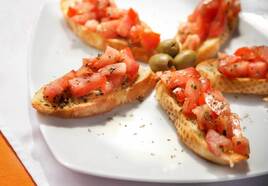 It may be the ideal way to keep costs in check while offering guests the kinds of appealing options that keep them engaged and bring them back: Offer creative snack foods and beverages that are worth the trip outside of meal times. Think functional beverages – like smoothies that offer an energy boost or other nutritional elements ideal for the pre- or post-workout crowd. The same goes for smaller nibbles that can drive traffic during slower parts of the day, attract a younger demographic, and may be easier to feature on a rotating basis as limited-time offers to keep your menu fresh. A recent Restaurant Dive report says more foodservice businesses are taking this route – simplifying the main menu but growing their options in other areas – in an effort to reduce operational complexity in their kitchens and manage costs.
|
Subscribe to our newsletter
Archives
April 2024
Categories
All
|
 RSS Feed