|
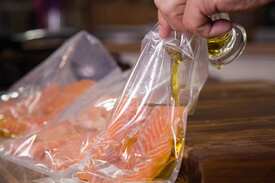
If you can find a way to consistently provide quality food in a way that allows guests to make a dish their own, your business is in a powerful place to build loyalty. Sous vide cooking, where vacuum-sealed food is slow-cooked in a precisely controlled water bath, is helping many operators achieve this by combining high-end culinary quality with large-scale efficiency. It’s enabling operators to provide personalized meals without compromising consistency or safety.
In senior living and healthcare facilities, sous vide enables the preparation of portion-controlled proteins like low-sodium chicken or herb-infused salmon that can be batch-cooked and chilled for quick, on-demand rethermalization. This allows foodservice operations to create meals tailored to strict dietary requirements, including heart-healthy and diabetic-friendly options, or even texture-modified diets, ensuring compliance without sacrificing flavor or nutrition. But there are benefits beyond those types of operations too. Because sous vide delivers consistent results across shifts and locations, multi-site foodservice businesses benefit from standardized quality with less staff training. While there are risks to manage with sous vide – e.g., some research highlights the importance of proper time-temperature control and the potential for specific bacteria to be more resistant to heat in certain cases – the benefits to overall safety and quality tend to outweigh them. Any chef would love to have their dishes prepared, plated and enjoyed by customers within a period of a few minutes. But these days, that is an unusual scenario. The pandemic has not only spurred reinvention in restaurant service structures. It is also necessitating changes in how food is prepared due to the lag time between when a food is cooked and when a customer is eating it. Pret A Manger has met that challenge by incorporating sous vide into some of its ghost kitchens. The brand just partnered with Cuisine Solutions to launch a sous vide ghost kitchen in New York, the Spoon reports. By cooking and keeping food at a stable temperature, sous vide helps ensure a food doesn’t lose quality during the lag time between preparation and consumption – think of a chicken breast that becomes dry and rubbery if it’s not eaten soon after grilling. In Pret A Manger’s case, sous vide also helps ease labor strains by having food prepared centrally and minimizing additional work required by kitchen staff. Throughout the past year, you have no doubt reviewed and reworked your menu to ensure it travels and represents your brand well when consumers aren’t eating your food on-premise. If there are popular and profitable (but not very portable) items you have had to remove from the menu until customers feel safe about eating in your dining room, are there preparation or packaging adaptations that could enable you to bring those items back and preserve the experience consumers have when they eat a meal in your dining room?
|
Subscribe to our newsletterArchives
November 2025
Categories
All
|
RSS Feed