 What can your tech tell you about your suppliers at this very moment? Supply chains continue to be strained and food quality and safety may suffer as a result, so it’s all the more important to have accurate, up-to-date safety and quality information about your suppliers at your fingertips. As a recent report from Modern Restaurant Management advises, operators should use their tech to manage supplier certification for vendors, continuously monitor the consistency and quality of their products, and store data about each supplier. This will make it easier to spot risks before they become full-blown problems, as well as help you identify suppliers with the strongest records of quality and safety.
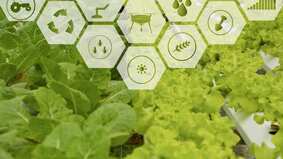 How well do you know the origins of the food you serve? Restaurants are able to collect a growing amount of information about the items they order – and that can enable much more powerful buying decisions and better management of food supply risks. Beyond fine-tuning inventory needs based on how your guests are ordering and helping you minimize waste, restaurant operators and other companies in the food supply chain are starting to use artificial intelligence to track and contain supply chain risks – say, tracking a recalled product and mining reams of data to identify trends from it or determine whether a specific supplier, distributor, or environmental problem is to blame. The company FourKites, which helps fine-tune shipment tracking for food suppliers ranging from US Foods to Tyson Foods, is one company bringing greater visibility to the supply chain.
 It seems like just a short time ago that ordering via a touchscreen at your table – or scrolling through a wine list or viewing other menu-related content on a communal tablet at a fine dining restaurant – was considered futuristic. Now that contactless is king and shared touchscreens are tools consumers may aim to avoid (unless they have hand sanitizer nearby), where are we likely to see tableside innovation? On a recent Foodable podcast, Shaun Shankel, CEO of FreshTechnology and ToGoTechnologies, expressed optimism in QR codes as mobile payment vehicles. Already in use to help guests at some restaurants view menus during the pandemic, QR codes are likely to gain momentum as a tool that enables a touch-free experience at a restaurant. They’re another reason to ensure all content you create for customers – whether it’s your menu, your background story, or behind-the-scenes videos you produce – is easy to view, interact with, and (where applicable) pay for via a customer’s personal device.
 There has been some recent buzz about the use of new ultraviolet lights that reportedly kill viruses and bacteria in the air without harming the body. If effective, they could have broad applications in restaurants, food distribution facilities and beyond. But do they work? Columbia University researchers tested the technology, called far-UVC, over the course of eight months and found that it killed the flu virus (their research was published in Scientific Reports) and their previous tests of the technology against MRSA also reportedly killed the bacteria without harming human tissue. Eater reports that Magnolia Bakery, for one, is replacing their recessed lighting with far-UVC light and also having customers pass through a far-UVC light scanner (akin to passing through a metal detector at the airport) upon entering their facilities to kill virus or bacteria they carry with them. Portable UVC lamps are also on the market. While the research is still new and it’s not clear whether the technology is effective against COVID-19, it promises to offer at least some additional protection in conjunction with other sanitation measures as we approach flu season. Find more background on the pros and cons in this New York Times report: https://bit.ly/2LNaG3t.
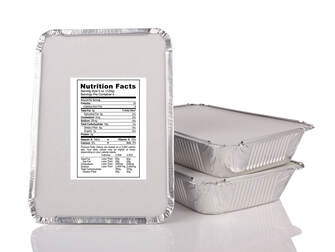 The FDA has relaxed some restrictions (https://bit.ly/2WyQLLP) on the labeling needed for packaged food for sale during the pandemic, but if you are among the operators considering a permanent pivot to retail food product sales, one resource to consider is Verywell Fit ( https://bit.ly/3dG5j1U), a site that allows you to input a recipe’s ingredients, analyze them and create a custom nutrition label for the item. Verywell is a partner of the Cleveland Clinic and its review board consists of board-certified physicians and other health and wellness professionals.
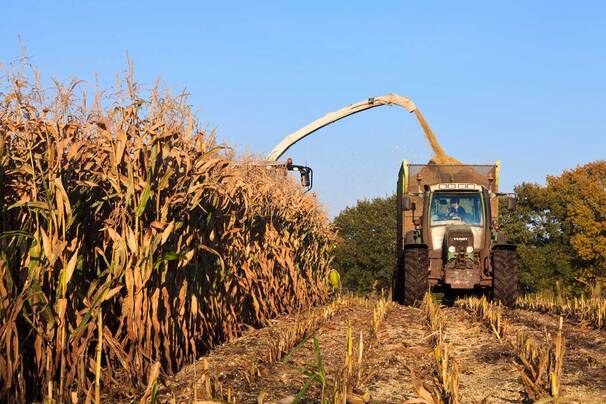 In recent weeks, the pandemic has led to increased vulnerability in the food supply chain, particularly as the FDA has relaxed certain standards and reduced inspections, and large numbers of sickened workers at Smithfield have forced the closure of one of the company’s largest pork production plants. Even before the pandemic, food traceability was a growing concern for consumers who care about where their food is coming from. As operators monitor changes to their food supply – both now and into our eventual recovery – technology will provide critical support. Mobile traceability tools, in particular, have the potential to fill some of the existing gaps in the supply chain, especially on farms, boats and other links in the chain where traceability tools haven’t been as widespread or easily deployed. You can believe that consumers will care even more about the origins of their food when this crisis is behind us. Read more in Food Navigator. (https://buff.ly/2KbIPca )
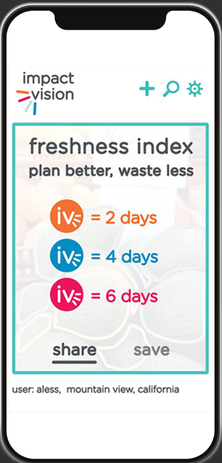 Wouldn’t it be nice if when you accepted a shipment of produce from a supplier, you would know if it was about to go bad? Or, in the wake of a foodborne illness outbreak, you could be certain your newly arrived produce wasn’t contaminated? That capability is becoming routine for some food companies and has the potential to give foodservice operations greater confidence in their food supply and a better handle on their food waste. Venture Beat reports that ImpactVision, a firm backed by logistics companies including Maersk, is currently using machine learning and hyperspectral imaging to assess the quality of food in factories and elsewhere. The company’s cameras and software can determine the freshness of a food and its expected shelf life, as well as detect any contamination — all without damaging the food in the process.
|
Subscribe to our newsletter
Archives
April 2024
Categories
All
|
 RSS Feed